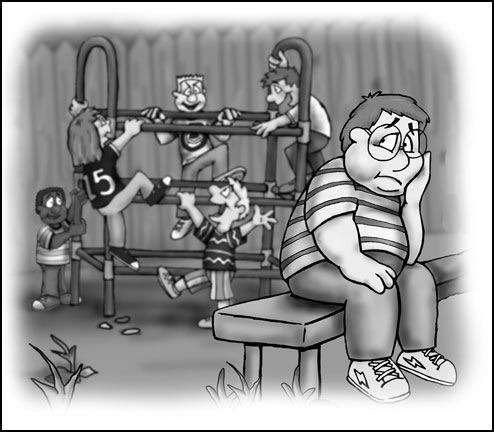
One part that stood out to me in the foreword of the Bluest Eye was the time the author stated that her friend wanted to have blue eyes. That got me thinking of a scientific fact I heard a couple of years ago: we all have blue eyes. The only difference between those having blue eyes and those not is that the latter have a thin layer of pigment covering their blue iris. In fact, blue eyes can be acquired through a quick and noninvasive surgical procedure. It is just a another reinforcement of the idea that appearance is superficial and that we are all equal. No particular look or bodily feature is superior to another and should not be desired in place of your own to the point where you may be depressed from dissatisfaction from your appearance. Although the iris surgery involves little risk and time, I strongly recommend not purchasing it. This is for that same reason I hate tattoos; a person's body is uniquely made and should not be altered artificially in the effort to look more unique or different. One of the keys to leading a happy life is to never be dissatisfied with your appearance even if it is not the desired one. Good looks can increase confidence, but not by much because confidence is mainly a self-made entity and you are only aware of your appearance only a fraction of the time you are conscious. Even if one is unhappy with their appearance, alterations are never necessary; appearance improves and declines exactly how money comes and goes, it is the wrong thing to be pursuing constantly and the pursuit never ends.
Sources:
The Bluest Eye by Toni Morrison
http://www.stromamedical.com/page/physician-info
This blog has been created to show the progression of a tenderfoot of a writer hopefully evolve into a seasoned writer. Only a willingness for hard work, learning from mistakes, and a passion for writing will result in a happy ending to this epic, nine-month journey.
My evolution
Sunday, October 26, 2014
Sunday, October 19, 2014
The Effects of Othering
Othering, or the expulsion of others socially in a hostile manner, is disgusting. There is no other social context that dehumanizes one group more in a communal setting. Yet, it has been and still is and inescapable flaw of society with prime examples being modern racism and gender inequality. Women in today's society are given a preliminary judgment by others on their appearance even before a conservation is had with them. Today, no matter what a woman wears "a woman's clothing...sends a message" (Tannen 390) what they wear always leads to the formation of predictions regarding her nature. If she looks as if she has not tried to look good, it is considered hostile. All of this leads to women not being considered human beings on the same plane of existence as men, but rather objects who should always maintain a pleasing or unique appearance. The fact that in society men do not have to go through this and women do puts women in a oppressed and sub-human position. Racism is the most common form of othering, as it effects both genders equally. Skin color, height, appearance, clothing all affect the disposition people have towards a person. As a "youngish black man-a broad six feet two inches with a beard and billowing hair" (Staples 205) Brent Staples was denied service because of his appearance. A jewelry store owner "excused herself and returned with an enormous red Doberman" perceiving him as a threat and in effect, preventing Staples from a peaceful browse. She effectively lowered Staples to a position below her by depriving him the right to be in her store. Appearance once again made a group of people sub-human in comparison to another. When Sherman Alexie read "Indians Lose Again" (Alexie 179) in the newspaper, he no doubt felt the impact of dehumanization as a result of how the headline inadvertently illustrated Native Americans as losers and an inferior race. Othering has no positive use and only serves to make people feel less than human when, in reality, nothing can change the status of human. There is no point in trying to prove a lack of humanity in a group of humans.
Sources:
"There Is No Unmarked Woman" by Deborah Tannen
"The Lone Ranger and Tonto Fistfight in Heaven" by Sherman Alexie
"Black Men and Public Space" by Brent Staples
Sources:
"There Is No Unmarked Woman" by Deborah Tannen
"The Lone Ranger and Tonto Fistfight in Heaven" by Sherman Alexie
"Black Men and Public Space" by Brent Staples
Saturday, October 11, 2014
Breaking The Bad Scarlet Letter (spoilers sorry)
After the reading the ending of the Scarlet Letter, I couldn't help but notice the similarities it had with the ending ofmy second favorite show, Breaking Bad. The main character of Breaking Bad, Walter White, is a mix of Dimmesdale and Chillingworth. He is an educated man who uses his intelligence to do evil just like Chillingworth, and he lives a secret, sinful, second life like Dimmesdale. Like Dimmesdale, Walter's life was revealed to all before his death, also Walter's death took place as soon as he ran out of targets for his malice (he ended up killing his final nemesis) similar to how Chillingworth's "evil principle was left with no further material to support it" (Hawthrone 255) . Walter was able to leave a huge sum of money for his children before his death similar to how Chillingworth ended up setting up Pearl for life. Hester and Walter's wife, Skyler, are both left to live lives of poverty and depression while their children progressed onward. Also, Skyler becomes aware about Walt's actions halfway through the show and keeps helps him keep his secret unhappily, becoming a sinner just like her lover. Also, the turing point in both stories had the couples (Hester and Dimmesdale, Skyler and Walt) almost achieving a life of total peace built on mutual agreement. However both moments were ruined by a third party learning of their plans. I believe that both stories ended in these dreary fashions for the same reason: to discourage behavior like that of the characters. Stories like these are made to give more character to social deviants and layer them, explore their motivations and the circumstances that force them to such actions but sad endings remind the viewer or reader that the characters were in the wrong. The similarities also show that limitations on how characters can be shown has stagnated. Hawthorne would have been in quite a bit of trouble if Hester lived happily ever after or was depicted as stunningly beautiful in the place of the harsh features the original cover showed her with. Similarly, Breaking Bad would have been perforated with controversy if Walt got away with all of his crimes and lived happily ever after despite deserving 10 lives in prison.
Sources: The Scarlet Letter by Nathaniel Hawthorne
Breaking Bad by Vince Gilligan
How you will end up looking if you sin.
Sources: The Scarlet Letter by Nathaniel Hawthorne
Breaking Bad by Vince Gilligan
Sunday, October 5, 2014
We Don't Need These Titles
One of the main points in Deborah Tannen's piece "There Is No Unmarked Woman" that stood out to me was the fact of how much a woman's title reveals about her. The line "Women can't even fill out a form without telling stories about themselves" got me wondering whether or not these these titles are useful, and I decided they aren't. I'm talking mainly about the social ones such as "Mr." and "Mrs./Ms.". By mentioning the marital status of a woman, the title detracts from her social standing and this feature of the title is wholly unnecessary. Of course, some married women prefer this way and enjoy having the title of "Mrs.", yet other women, who are no less happier with their marriage, rightfully wonder what their marital status has to do with their professional life. Why should it matter if they are married or not? If people believe that one should never mix their personal and professional life, then this is a valid scenario to practice that belief. A bigger question is why does a man not have to disclose this information? Although some may argue that married women have a choice in whether or not they change their title or use whichever one they want to; however, not using "Mrs." always causes people to jump to conclusions about the state of her marriage or her husband may not appreciate the decision. It is for these reasons that unisexual titles such as "Esq." and "Dr." should be the norm and ones that denote marital status need to go. They have no place in a society that prides itself in its self-proclaimed gender equality.
(Also, why make it so complicated?)
Sources:
"There Is No Unmarked Woman" by Deborah Tannen
Article about professional titles-
http://www.emilypost.com/communication-and-technology/social-names-and-titles/774-professional-titles
(Also, why make it so complicated?)
Sources:
"There Is No Unmarked Woman" by Deborah Tannen
Article about professional titles-
http://www.emilypost.com/communication-and-technology/social-names-and-titles/774-professional-titles
Sunday, September 28, 2014
When "Justice" Leads to Cruelty
No matter how good-intentioned the founders of a utopia were, the society has always fell into dystopia as a result of its flaws. A great example would be Puritan society in The Scarlet Letter. In it, one of the most unpleasant facets of society, the prison, was created first. Why would a society aiming to be utopian give such importance to something that will be hopefully absent from it (crime)? Prisons are not used to rehabilitate its inhabitants but to keep a person who is a danger to society out of society. The question is then, why is an adulteress, who is publicly shamed and and branded to remind others of her transgression given a prison sentence to serve with her newly-born, and thus frail, infant? It is hard to understand how this much punishment is a just answer to love outside of marriage and speaks to the cruelty of Puritan society rather than its emphasis on justice and righteousness. This view of a paradoxical Puritan justice system applies to many other aspects Puritan society; for example, if righteousness is encouraged as a result of belief in predestination, there is no rational justification for the poor being rude to Hester when they should be grateful for the gifts she brings. Even history describes the Puritans as "...neither as somber nor as simple as they are often pictured." (The Life and History of Nathaniel Hawthorne). The timeless phrase "To err is human, to forgive, divine." brings into perspective the how divergent Puritan justice was in contrast to the divinity that predestination encourages the pursuit of.
Sources: "The Life and Work of Nathaniel Hawthorne"
The Scarlet Letter by Nathaniel Hawthorne
An Essay on Criticism by Alexander Pope
Sources: "The Life and Work of Nathaniel Hawthorne"
The Scarlet Letter by Nathaniel Hawthorne
An Essay on Criticism by Alexander Pope
Sunday, September 21, 2014
Should You Try to Break Stereotypes?
Pretty much all races of humans have a stereotypical image in society. People think that Native Americans are alcoholics, Black men are muggers, Asian people study all day because of their mean parents, all Indians grow up to become doctors, the list goes on. Some stereotypes might be true, but they are almost always the result of socio-economic differences that no on can control One way to diminish the effect is to attempt to escape from these stereotypes and live completely differently than how people think you should. This is not foolproof because stereotypes are much stronger to the point where despite having an education, Brent Staples was still "mistaken for a burglar" (Staples 207). The problem with this course of action is about what happens when one wants to live up to his/her stereotype. For example, what if a Indian boy or girl wants to be a doctor, but doesn't want to be thought of as "a doctor whose parents made them go to medical school". Is it worth it becoming something other than what you have dreamt of becoming worth it just to stand out in the eyes of society? Of course not. Stereotypes are unfair, but breaking them is a group effort, only time can allow all races to be present in every facet of society and mend the wounds stereotyping creates. No one person should sacrifice their life (figuratively speaking) and live not as themselves but as someone society notices for being outside of the norm.
Sunday, September 14, 2014
The Science of Memorials
Neil Patel
9/14/14
1st hour
The Science of Memorials
A huge amount of effort is put into making memorials some of the most evocative forms of art on the planet. Everything from the location to the materials used are painstakingly chosen in order to immortalize the event it stands for. For example, part of the materials used in the Oklahoma City Bombing Memorial are from the building destroyed by the blast. This memorial has one of the most vivid resemblances to the event it represents. Also, physical features are important in cases like the Korean War Veteran's Memorial because of the fact that its 19 soldier statues and their 19 reflections on the naming wall stand to represent the 38th parallel, or the border between North and South Korea after the end of the war. The Vietnam War Memorial has an aspect of time in its design; to elaborate, if one looks on the right and left of the memorial, they will see the Washington Monument and Lincoln Memorial. Thus, the memorial tells visitors that every life lost in the war were as important as the country's most famous presidents. I have never looked at memorials so closely before, but after learning about the hidden meanings each one carries, I just want to see more.
![]() |
| Korean War Veteran's Memorial |
![]() |
| Oklahoma City Bombing Memorial |
Korean War Memorial: http://www.kbtours.com/korean-war-memorial/
Oklahoma City Memorial: http://www.oklahomacitynationalmemorial.org/secondary.php?section=5&catid=119
Subscribe to:
Posts (Atom)