My evolution

My evolution

Saturday, November 29, 2014

Rose-Colored Glasses

When you were a child and really wanted something, your parents gave you a reluctant promise of providing it but what did they always say?  "Don't get your hopes up."  Yet our minds' tendency to dream and romanticized things makes this extremely difficult.  Romanticizing the past does nothing but stunt the present.  The more someone thinks and makes the past seem better than it was, the more they want to go back to it.  When this happens, he/she become so infatuated with the past that they stop developing his/her current life.  This is exactly what happens to Gatsby, "He talked a lot about the past, and I gathered that he wanted to recover something...His life had been confused and disordered since then," (Fitzgerald 110).  Another danger of romanticizing the past is the fact that if the past is partially reclaimed (Gatsby at least reunites with Daisy), the romanticized subject is never as impressive as dreamed-up counterpart.  To put this into context, when Gatsby gets Daisy to see his house after having tea at Nick's "Daisy tumbled short of his dreams-not through her own fault, but because of the colossal vitality of his illusion" (Fitzgerald 95). This proves that romanticizing the past does nothing but bring dissatisfaction and the same occurs when the future is romanticized.  Luckily, we tend to do the latter less often but it is still important to "define it[dreams] differently" (Glassner) when times become tough and the dreams move farther out of reach.  The danger with not following Glassner's advice is feeling disappointed whenever our dreams are mostly realized but certain facets are left out.  Dreaming is fine and healthy within reason, but romanticizing the past always keeps us stuck in the past, so our best course of action is keep those "rose-colored glasses" off.

Sources:
The Great Gatsby by F. Scott Fitzgerald
http://www.nytimes.com/2009/05/08/us/08dreampoll.html?_r=0

Saturday, November 22, 2014

The Green Light

"I could have sworn he was trembling.  Involuntarily I glanced seaward-and distinguished nothing except a single green light, minute and far way, that might have been the end of a dock.  When I looked once more for Gatsby he had vanished, and I was alone again in the unquiet darkness."  (Fitzgerald 21)

This passage has elicited the most profound reaction from me.  It is a great example of the masterful imagery found in The Great Gatsby.  In my mind, the scene takes place in a cold, dark night, and Gatsby is only barely visible.  There is a thick mist across the sea and the green light fractures in every droplet with a slow, beating frequency similar to the core of dead star.  This scene also adds depth to the personalities of this historical era of excess and extravagance.  We don't know anything about Gatsby at this point in time other than the fact that he is extremely rich.  People usually assume that rich people is perfectly fulfilled but this scene shows otherwise.  The trembling hints at a void in Gatsby's life and a strong desire for something important, something money can't buy.  The misty night, the shrouded personality of Gatsby, and the fact that we are viewing this world through the eyes of Nick Carraway, who is still figuring out where he fits in this complex, high society, create such a strong air of mystery that makes this book impossible not to continue reading.  This passage is a wonderful example of keeping a novel interesting and engaging from the onset.


Sunday, November 16, 2014

We Change, So Must Language

What critics of grammatical evolution don't understand that is that they are fighting for a lost cause.  Language has and will continue to change as long as it is in use.  It will never reach the point of simplicity to where our sentences look like "Gr8 C u l8r @ skul" (Hitchings) so such fears are baseless.  This is proven by the fact that the users of this kind of language-which is pretty much everyone with a cell phone-do not use it in formal writing.  There must be a solid, complete, and universal allowance of such language for it to become the norm, but there are no seemingly rational circumstances under which this would come to pass.  The fact that Elizabeth Austen claims that there is a "dogma of the period" (Austen) exposes the unnecessary nature of rules as strict as they currently are.  Statements like these from accomplished authors like Austen have sufficient credibility because of the fact that their career choice was based on a love for writing, and complaining about something one love highlights the fact that there may be true flaws in a system that deserve consideration.  Lewis Thomas expresses dislike of certain rules and marks in statements like "Exclamation points are the most irritating of all" (Thomas) and "Colons are a lot less attractive" (Thomas); now, such complaints would be acceptable to hear from a teenager-who may not have mastery of such devices and is thus frustrated-but these are coming from a man has gained mastery of punctuation but still dislikes it.  It again emphasizes that, through a rational viewpoint, certain aspects of grammar and punctuation is obtuse and in need of revising.  The tumultuous opinion Ben Dolinick has had about semicolons as a result of Kurt Vonnegut's opinions brings up the question of who should we trust?  The answer is Vonnegut because of the mark he has made on English Literature as a whole which gives the ethos required to propose massive revisions in it.  The changes in language never happen because frustrated teenagers have a tough time dealing with it, but because the champions of the field truly believe that something in their line of work is amiss and needs fixing in order to be more accessible but equally enjoyable for all.


It won't get this bad, but everyone acts like it will

Sunday, November 9, 2014

Morrison's Beautiful Language

"So strong was her affection and zest for life" (Morrison 69)

This particular line stuck me because of the contrast it illustrates between Velma and, quite frankly, every other character in the Bluest Eye.  Considering the fact that interracial marriage was a social taboo at the time of Elihue's youth, Velma is likely African American, but she carries a characteristic that no other African American character except perhaps Maureen does  The contrast this line creates makes it beautiful because it marks a refreshing change in diction for a period in the novel.  It made me interested in how her positive outlook on life will affect the content of the chapter.  I believed she might have a positive and drastic effect on Elihue, or may do things that improve her life and those around her.  However, that turned out to be a naive notion.  The broken man she leaves Elihue as on the next page keeps the novel's tone intact but also displays another positive characteristic in Velma, strength.  Despite living a subsistent existence before her marriage to Elihue, Velma chose to return to it instead of carrying out a boring but comfortable one with him.  She values her time spent on this Earth and doesn't want others selfishly wasting it; she makes the most of the life she is given, no matter how little she has been given.  Unlike Pecola, who only wishes for things in her life to improve, Velma takes the initiative in incrementally improving her life.  By including this line in The Bluest Eye, Morrison creates verisimilitude by including the fact that the real world is not populated by deeply flawed or hurt people, some people simply find a way to thrive against all odds.


The pawn, like Velma, does not falter in the face of adversity

Sources:
The Bluest Eye by Toni Morrison

Sunday, November 2, 2014

The Responsibility of the Community

Many people from many different communities have a hands-off approach to their surroundings.  If someone is being harassed in public, some people just walk by.  If someone is beat up at school and the staff does not know about it, most of the students who spectated to do not alert authorities because its "Not my problem".  Is this pragmatic approach of not helping others with their problems justified? The short and simple answer is no.  To elaborate, we live where we do in society in order to help each other and improve both our lives and those of others.  That is the essence of what makes us a town, city, or country.  Paying taxes helps the government make improvements for everyone.  However, that won't help the victimized school kid nor the family of the town drunkard.  People have a responsibility to help others when they do not share the same problems in order to equalize their positions.  It is true that helping others is a group effort and that getting between fights can be dangerous, but it is also true that group efforts start with an individual to ignite them.  Another way to think of this is "No one has to do everything… but, everyone has to do something. We all can do our part to have each other’s backs." One person needs to take the initiative in order for others in a community to help their fellow residents.  The civilian-to-police ratio is hugely disproportionate and it is impossible for everyone to be completely safe as a result of police work alone.  Community members must help.  Also, police officers are still human, thus their righteousness is not guaranteed.  The only way a community can be truly safe, is if its members take an active interest in ensuring the safety of their fellow members.  The lack of this characteristic in Pecola's community one of the root causes of its current harshness.


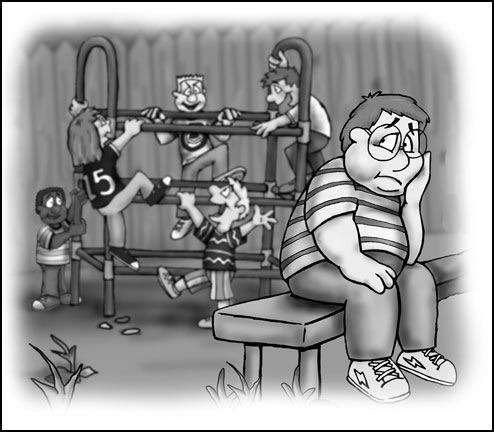
No help from bystanders

Sources:
The Bluest Eye by Toni Morrison

http://www.ihollaback.org/resources/responding-to-harassers/

Sunday, October 26, 2014

Makeovers Aren't Necessary

One part that stood out to me in the foreword of the Bluest Eye was the time the author stated that her friend wanted to have blue eyes.  That got me thinking of a scientific fact I heard a couple of years ago: we all have blue eyes.  The only difference between those having blue eyes and those not is that the latter have a thin layer of pigment covering their blue iris.  In fact, blue eyes can be acquired through a quick and noninvasive surgical procedure.  It is just a another reinforcement of the idea that appearance is superficial and that we are all equal.  No particular look or bodily feature is superior to another and should not be desired in place of your own to the point where you may be depressed from dissatisfaction from your appearance.  Although the iris surgery involves little risk and time, I strongly recommend not purchasing it.  This is for that same reason I hate tattoos; a person's body is uniquely made and should not be altered artificially in the effort to look more unique or different.  One of the keys to leading a happy life is to never be dissatisfied with your appearance even if it is not the desired one.  Good looks can increase confidence, but not by much because confidence is mainly a self-made entity and you are only aware of your appearance only a fraction of the time you are conscious.  Even if one is unhappy with their appearance, alterations are never necessary; appearance improves and declines exactly how money comes and goes, it is the wrong thing to be pursuing constantly and the pursuit never ends.


Sources:
The Bluest Eye by Toni Morrison
http://www.stromamedical.com/page/physician-info

Sunday, October 19, 2014

The Effects of Othering

Othering, or the expulsion of others socially in a hostile manner, is disgusting.  There is no other social context that dehumanizes one group more in a communal setting.  Yet, it has been and still is and inescapable flaw of society with prime examples being modern racism and gender inequality.  Women in today's society are given a preliminary judgment by others on their appearance even before a conservation is had with them.  Today, no matter what a woman wears "a woman's clothing...sends a message" (Tannen 390) what they wear always leads to the formation of predictions regarding her nature.  If she looks as if she has not tried to look good, it is considered hostile.  All of this leads to women not being considered human beings on the same plane of existence as men, but rather objects who should always maintain a pleasing or unique appearance.  The fact that in society men do not have to go through this and women do puts women in a oppressed and sub-human position.  Racism is the most common form of othering, as it effects both genders equally.  Skin color, height, appearance, clothing all affect the disposition people have towards a person.  As a "youngish black man-a broad six feet two inches with a beard and billowing hair" (Staples 205) Brent Staples was denied service because of his appearance.  A jewelry store owner "excused herself and returned with an enormous red Doberman" perceiving him as a threat and in effect, preventing Staples from a peaceful browse.  She effectively lowered Staples to a position below her by depriving him the right to be in her store.  Appearance once again made a group of people sub-human in comparison to another.  When Sherman Alexie read "Indians Lose Again" (Alexie 179) in the newspaper, he no doubt felt the impact of dehumanization as a result of how the headline inadvertently illustrated Native Americans as losers and an inferior race.  Othering has no positive use and only serves to make people feel less than human when, in reality, nothing can change the status of human.  There is no point in trying to prove a lack of humanity in a group of humans.


Sources:
"There Is No Unmarked Woman" by Deborah Tannen
"The Lone Ranger and Tonto Fistfight in Heaven" by Sherman Alexie
"Black Men and Public Space" by Brent Staples